Categories
News

Selected Oranda for sale update April 2024

New availability April 2024 of selected Oranda

Maipenrai Aquarium: Tropical fish exporter from Thailand


The Oranda is a popular variety of fancy goldfish known for its distinctive appearance, characterized by a prominent hood or wen on its head. The Oranda is believed to have originated in China, where selective breeding of goldfish began centuries ago.

Goldfish, including the Oranda, were initially bred from a type of wild carp known as the Prussian carp (Carassius gibelio), which was native to East Asia. The selective breeding process aimed to enhance certain physical traits, such as coloration, body shape, and finnage.

The Oranda likely emerged as a result of selective breeding efforts in China during the Ming Dynasty (1368–1644) or earlier. The development of the hood or wen on the head of the Oranda is a mutation that occurred during the breeding process. This distinctive feature has become one of the defining characteristics of the Oranda and is highly prized by goldfish enthusiasts.

Goldfish, including the Oranda, were introduced to Japan in the 16th century, where they were further developed and refined by Japanese breeders. The Japanese played a significant role in the cultivation of various fancy goldfish varieties, including the Oranda, Ryukin, and Ranchu.

Today, the Oranda remains a beloved and sought-after variety of goldfish worldwide, admired for its elegant appearance and graceful swimming behavior. Hobbyists continue to selectively breed Orandas to enhance their unique characteristics and develop new color variations, ensuring that this beautiful fish remains a favorite in the aquarium hobby.

In the context of goldfish breeding and trading, the term “A grade Oranda” typically refers to a high-quality specimen that exhibits desirable characteristics according to the standards set by goldfish enthusiasts and breeders. These characteristics can include:

  1. Body Shape: A well-proportioned body with a smooth, rounded shape and no deformities or irregularities.
  2. Hood or Wen: A prominent, well-developed hood or wen on the head, which is one of the defining features of the Oranda variety. The hood should be large, symmetrical, and evenly distributed over the head.
  3. Coloration: Vibrant and consistent coloration across the body, fins, and hood. Different color variations exist, including red, orange, white, black, and calico (a mix of colors).
  4. Finnage: Finnage should be in proportion to the body and display a clean, crisp appearance with no signs of damage or deformities.
  5. Health and Condition: A healthy and active fish with clear eyes, smooth scales, and no signs of illness or disease.

Goldfish grading can vary slightly depending on the specific preferences of individual breeders and the standards of different organizations or competitions. However, an A grade Oranda generally represents a top-quality specimen that meets or exceeds the expectations for the variety. These fish are often prized by hobbyists and collectors for their beauty and potential for breeding or exhibition.
Categories
News

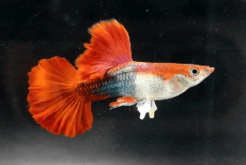
Guppy A grade for sale in Thailand

Selected guppy for export – High quality guppy


Guppies are small, colorful freshwater fish that belong to the Poeciliidae family. They are native to the waters of Central America, specifically Trinidad and Tobago, Venezuela, Guyana, and northern Brazil. Guppies are popular among aquarium hobbyists due to their vibrant colors, easy care requirements, and active behavior.

These fish come in a wide variety of colors, patterns, and fin shapes, thanks to selective breeding efforts over many years. Male guppies are typically more colorful and have larger fins compared to females. They are known for their live-bearing reproduction, meaning they give birth to free-swimming fry rather than laying eggs.

Guppies are generally peaceful and social fish that can be kept in community aquariums with other small, non-aggressive fish. They prefer a well-filtered aquarium with plenty of plants and hiding spots. Guppies are omnivores and will eat a diet of flake or pellet food supplemented with live or frozen foods like bloodworms or brine shrimp.

Overall, guppies are a popular choice for beginner aquarists and experienced hobbyists alike due to their beauty, ease of care, and interesting behavior.

“Guppy A grade” typically refers to guppies that have been selectively bred and judged to meet certain criteria, usually related to their appearance, coloration, finnage, and overall quality. In the world of guppy breeding, different grades are often assigned to guppies based on their quality, with “A grade” being among the highest. These guppies are usually characterized by vibrant colors, well-defined patterns, and symmetrical fins.

For hobbyists and breeders, striving for “A grade” guppies can be a rewarding pursuit, involving careful selection of breeding pairs, attention to water quality and nutrition, and sometimes even specialized breeding techniques to enhance desired traits. In competitions and exhibitions, guppies are often judged based on criteria specific to their breed standards, with “A grade” guppies being highly sought after for their beauty and excellence.

Keeping guppies can be a rewarding and enjoyable hobby. Here are some key points to consider when setting up and maintaining a guppy aquarium:

  1. Aquarium Setup: Start with a suitable aquarium size. A 10-gallon tank or larger is recommended for a small community of guppies. Ensure the tank has a secure lid to prevent jumping, as guppies are known to be quite active. Use a quality aquarium filter to maintain water quality and a heater to keep the water temperature stable, ideally between 72-82°F (22-28°C).
  2. Water Parameters: Guppies prefer slightly alkaline water with a pH level between 6.8 and 7.8. Ammonia and nitrite levels should be kept at zero, and nitrate levels should be kept low with regular water changes. Test the water parameters regularly using a reliable test kit.
  3. Decorations and Substrate: Provide plenty of live or artificial plants for guppies to explore and hide among. Guppies enjoy having places to rest and feel secure. Use a fine-grained substrate such as sand or gravel for the bottom of the tank.
  4. Tank Mates: Guppies are peaceful fish and can be kept with other small, non-aggressive species that share similar water requirements. Suitable tank mates include tetras, danios, mollies, platies, and peaceful bottom-dwellers like Corydoras catfish.
  5. Feeding: Guppies are omnivores and will eat a variety of foods, including high-quality flake or pellet food, as well as live or frozen foods like bloodworms, brine shrimp, and daphnia. Offer a varied diet to ensure they receive all the necessary nutrients.
  6. Breeding: Guppies are prolific breeders, and females can give birth to fry every 4-6 weeks under optimal conditions. If you want to control the population, consider separating male and female guppies or providing plenty of hiding places for fry to escape predation.
  7. Maintenance: Perform regular water changes of 20-30% every 1-2 weeks to remove waste and maintain water quality. Clean the aquarium equipment, such as the filter and heater, as needed to ensure proper functioning.

By following these guidelines and providing a suitable environment, you can enjoy the beauty and charm of guppies in your aquarium for years to come.

Maipenrai Aquarium Tropical Fish Exporter