Categories
News

Fresh Water Aquarium Shrimps – Neocaridina genus –

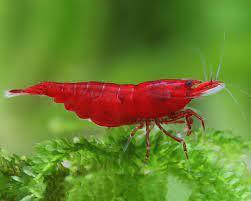
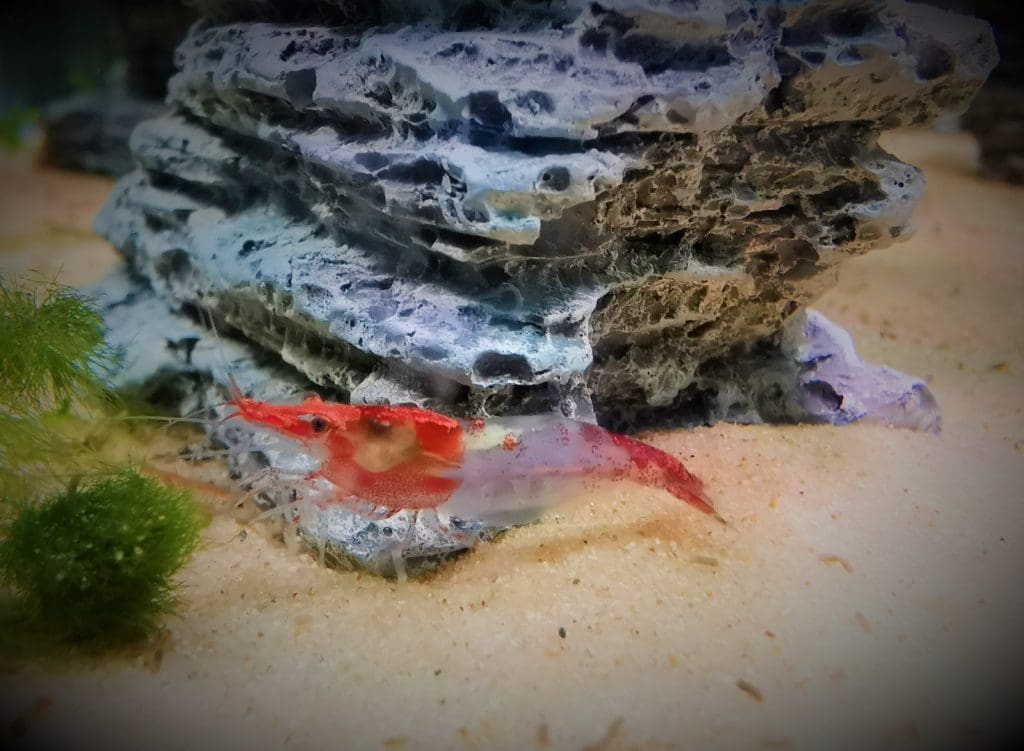
Neocaridina davidi, Red Rili Shrimps

The varieties and basic information for successful breeding of Neocaridina in the aquarium

Neocaridina davidi, also known as the cherry shrimp or red cherry shrimp, is a small freshwater crustacean that is popular in the aquarium trade. It is native to Taiwan and is widely kept in home aquaria as a decorative species due to its attractive red coloration. Cherry shrimp are relatively easy to care for and can thrive in a variety of water conditions. They are peaceful and do well in community tanks with other small, non-aggressive fish species. They are omnivorous and will eat a variety of foods, including algae, plant matter, and commercially available shrimp pellets or flakes. It is important to maintain good water quality and to provide plenty of hiding places for the shrimp in the tank. Cherry shrimp are known to breed readily in the home aquarium and can produce hundreds of offspring if conditions are favorable.

Cherry shrimp are relatively easy to breed in the home aquarium. They are known for their ability to produce hundreds of offspring under favorable conditions. Here are some tips for breeding cherry shrimp:

  1. Start with a healthy, well-established colony of cherry shrimp. A 10-gallon tank with a stable water quality and temperature is sufficient for a small colony.
  2. Provide plenty of hiding places for the shrimp to lay their eggs. Shrimp like to lay their eggs in crevices or on plants, so be sure to include plenty of decorations in the tank.
  3. Feed the shrimp a varied diet to ensure they are getting all the nutrients they need. A combination of algae, plant matter, and commercial shrimp pellets or flakes is sufficient.
  4. Maintain good water quality. Cherry shrimp are sensitive to poor water conditions, so be sure to regularly test and maintain the pH, temperature, and overall water quality.
  5. Keep the tank well-aerated. Cherry shrimp require a good supply of oxygen to thrive, so be sure to use a high-quality filter and consider adding an air stone to the tank.
  6. Once the shrimp reach sexual maturity (around 3-4 months old), they will begin to breed. The females will lay their eggs on the underside of leaves or in other hiding places in the tank. The eggs will hatch into larvae after about a week, and the larvae will develop into adult shrimp after another week or two.
  7. It is important to separate the adult shrimp from the larvae to prevent the adults from eating the young. You can do this by using a partition or by setting up a separate tank for the larvae.

By following these steps, you should be able to successfully breed cherry shrimp in your home aquarium.
Neocaridina davidi, Blue Rili Shrims

There are several varieties of Neocaridina genus shrimp that are popular in the aquarium trade. Some of the most common varieties include:

  1. Cherry shrimp (Neocaridina davidi): This is the most popular variety of neocaridina shrimp, known for its bright red coloration. It is native to Taiwan and is relatively easy to care for in the home aquarium.
  2. Yellow shrimp (Neocaridina heteropoda): This variety of neocaridina shrimp is known for its bright yellow coloration. It is native to Taiwan and is also relatively easy to care for in the home aquarium.
  3. Blue shrimp (Neocaridina denticulata sinensis): This variety of neocaridina shrimp is known for its bright blue coloration. It is native to Taiwan and is similar in care to the cherry and yellow shrimp.
  4. Green shrimp (Neocaridina denticulata sinensis): This variety of neocaridina shrimp is known for its bright green coloration. It is also native to Taiwan and is similar in care to the other neocaridina varieties.
  5. Snowball shrimp (Neocaridina cf. zhangjiajiensis): This variety of neocaridina shrimp is known for its white coloration with red eyes. It is native to China and is similar in care to the other neocaridina varieties.
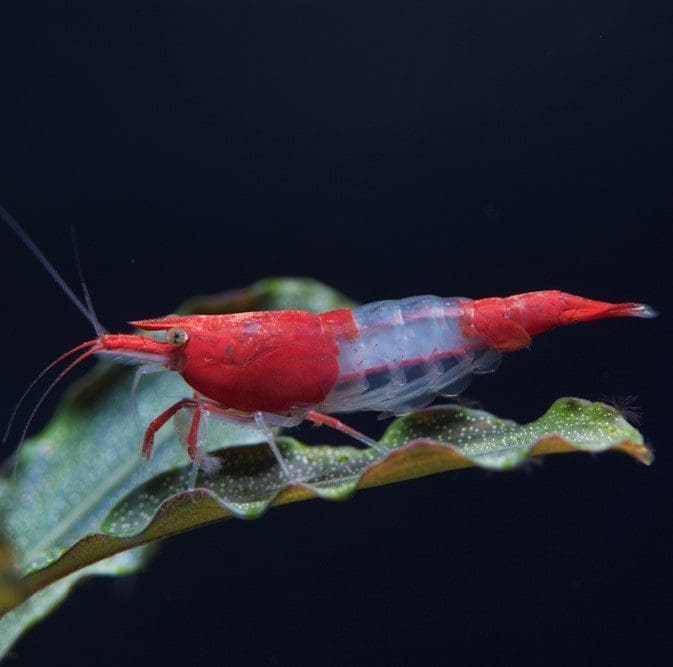
  6. Red rili shrimp (Neocaridina cf. zhangjiajiensis): This variety of neocaridina shrimp is known for its red and white striped coloration. It is native to China and is similar in care to the other neocaridina varieties.

These are just a few examples of the many varieties of neocaridina shrimp that are available in the aquarium trade. Each variety has its own unique coloration and characteristics, making them popular choices among hobbyists.
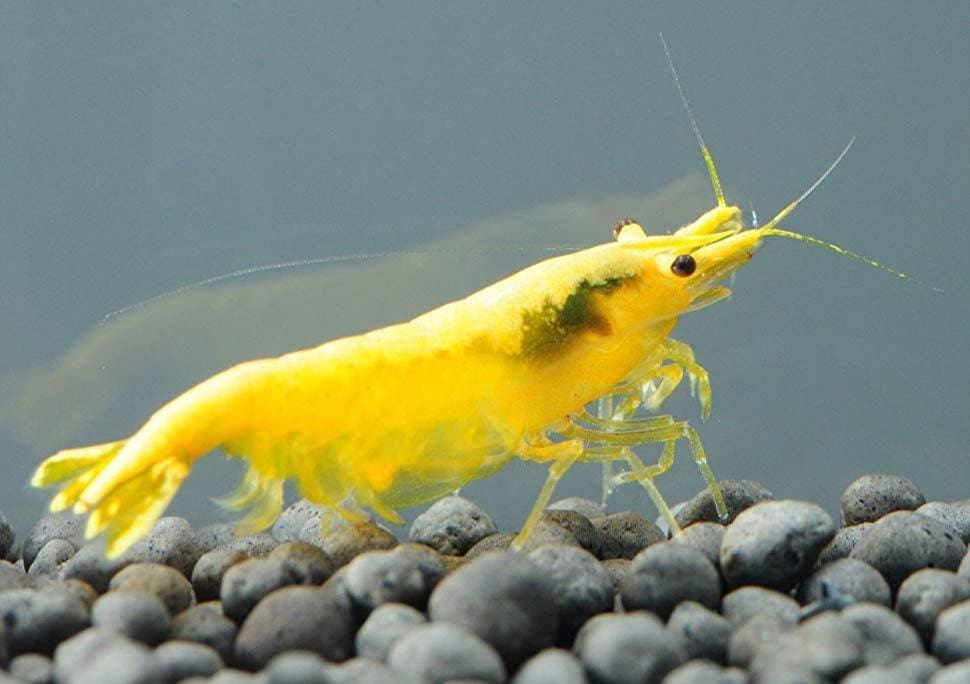
Neocaridina davidi, Yellow shrimp
Neocaridina davidi, Red Rili Shrimps
Categories
News

Angelfish for import/export from Thailand

A classic aquarium fish that can never be missing.

Angelfish – Pterophyllum scalare-

Pterophyllum scalare, commonly known as the angelfish, is a species of freshwater fish native to the Amazon Basin in South America. It is a popular aquarium fish due to its unique shape and distinctive patterns. The angelfish is part of the cichlid family and can grow to be about six inches long. It is known for its long, flowing fins and the elongated dorsal and anal fins that give it a distinctive shape. The angelfish is a popular choice for aquarium hobbyists due to its striking appearance and relative ease of care.

Angelfish, like most freshwater aquarium fish, require clean, well-maintained water in order to thrive. The specific water parameters that are suitable for angelfish will depend on the individual tank and its inhabitants, but in general, angelfish require the following conditions:

  • Temperature: Angelfish prefer a water temperature of around 78-82°F (26-28°C).
  • pH: The pH of the water should be between 6.5 and 7.5.
  • Water hardness: The water hardness should be between 5-15 dH.
  • Ammonia and nitrite levels: These levels should be kept at 0 ppm (parts per million).
  • Nitrate levels: Nitrate levels should be kept below 20 ppm.

It is important to regularly test the water in your angelfish tank and make sure that the parameters are within the recommended range. If the water quality is poor, it can lead to illness and stress in your fish, which can negatively impact their health and well-being.

Angelfish breeding can be a rewarding experience for aquarium hobbyists. In order to breed angelfish, you will need to provide a suitable environment for the fish to spawn in. This includes a separate tank for the breeding pair, as well as a suitable substrate for the fish to lay their eggs on. Angelfish typically lay their eggs on a flat surface such as a piece of slate or a smooth rock.

Once you have provided a suitable environment, you will need to encourage the angelfish to breed. This can be done by providing the fish with good water quality, a varied and nutritious diet, and by simulating the natural breeding season through changes in temperature and lighting.

When the angelfish are ready to breed, the female will lay a clutch of eggs on the chosen substrate, and the male will then fertilize them. The eggs will hatch after about three to five days, and the fry will be free-swimming after another seven to ten days. At this point, the fry will need to be removed from the breeding tank and placed into a separate tank to grow and develop.

Angelfish breeding can be a challenging but rewarding experience. It is important to do your research and be prepared before attempting to breed these fish.

Top of Form

Angelfish, or Pterophyllum scalare, are known for their unique patterns and colors, and there are many different strains or varieties of these fish available. Some of the most popular angelfish strains include:

  • Zebra angelfish: These angelfish are named for the distinctive black and white stripes that cover their body.
  • Gold angelfish: Gold angelfish have a bright golden color, and are a popular choice among aquarium hobbyists.
  • Silver angelfish: Silver angelfish are similar to gold angelfish, but have a more metallic, silver-gray color.
  • Koi angelfish: Koi angelfish are named for their resemblance to the colorful koi fish, and have a mix of red, orange, black, and white patterns on their body.
  • Marble angelfish: Marble angelfish have a marbled pattern on their body, with a mix of black, white, and sometimes other colors.

These are just a few examples of the many different angelfish strains that are available.

Don’t hesitate to contact us for ask our update stoc klist

Categories
News

Feed 4 Fish – Feed for fry

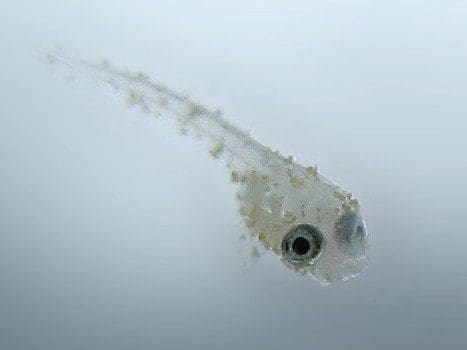
A new product made by Feed 4 Fish for the breeding and growth of fry of all tropical fish

One of the most beautiful and interesting challenges in keeping aquarium fish is the reproduction of fish.

The reproduction of fish certainly represents the highest point to which aquarium enthusiasts aspire as it is representative of an excellent state of health of the fish and therefore of the aquarium ecosystem.

Normally the moment of mating and hatching happens without too many problems, but every breeder knows that the most difficult moment comes after: feeding the fry.

For many species that are very common in the aquarium (for example all fish of the Poecilidae family), feeding after birth is not a problem as they are already able to feed themselves similar to the way they feed themselves. adults, but for many other species it is certainly more difficult.

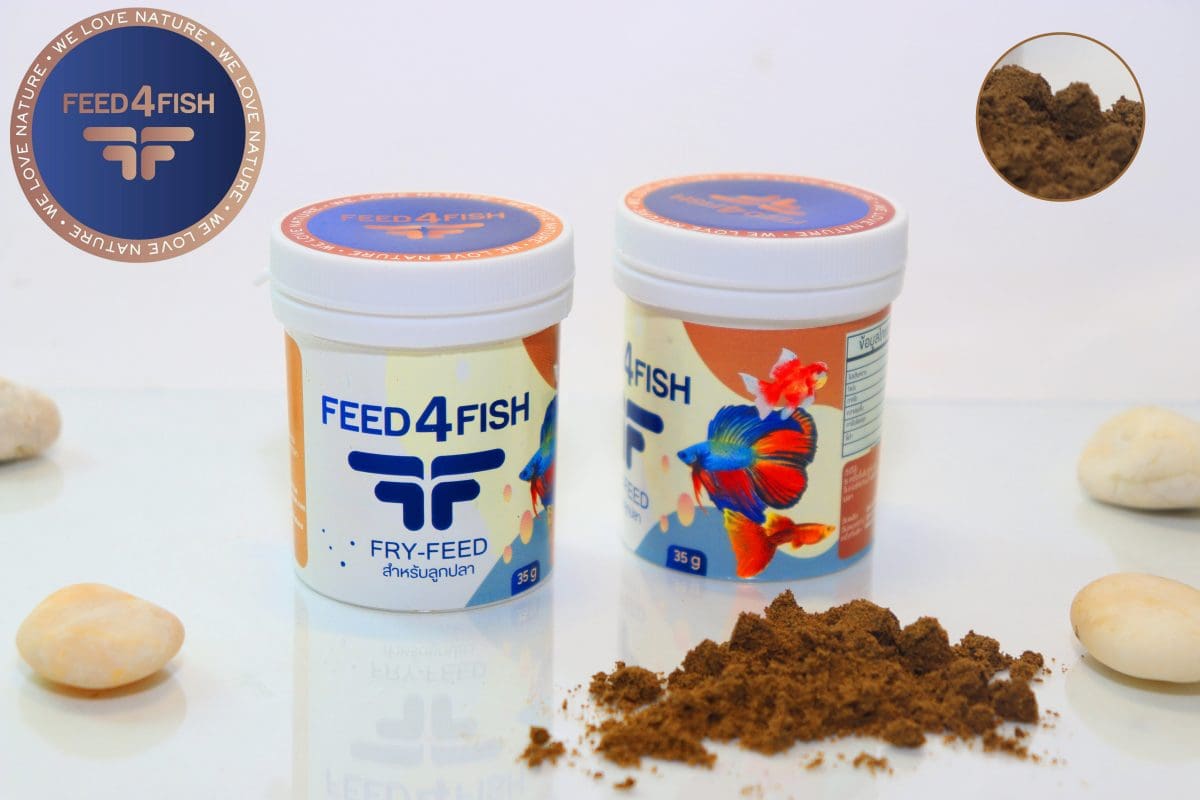
Feed 4 Fish – Fry Feed – is the right feed for these fish whose feeding and growing can be difficult.

This food for fry is made exclusively with pure Black Soldier Fly (Hermetia illucens) flour produced with the highest quality standards, but not only: the size of this flour is so small as to be immediately recognizable by all fry as edible food, thanks also to the ability of this food to float in the water, simulating the movement of the preys that they naturally hunt in their natural environment.

Furthermore, the particularly high protein percentage (the noble proteins are at 60%) allows a rapid and healthy growth of the fry, without altering the water conditions, an essential condition for success in carrying on the brood.

In addition to all these advantages, Black Soldier Fly flour is probably the most eco-sustainable food source on the market right now: Black Soldiers Fly is raised using organic waste from agriculture and this makes it one of the first completely “green”.

Maipenrai Aquarium has been using this fry food for breeding wild Bettas for some time now, with incredible results and many other Thai breeders are starting to use it with success.

Excellent results have also been obtained with the maintenance of adult guppies: integration with this feed effectively contributes to the maintenance of health and contributes to an improvement in coloring and reproduction capacity.

For any information or question, do not hesitate to contact us

Our staff is at your complete disposal to answer your questions

Betta fry, feeding Betta fry
Categories
News

Feed 4 Fish Koi-Snack (Koi Snack for koi carp)

A new excellent feed for fish to be used as delicacies for Koi’s carp and for all large aquarium fish

Feed 4 Fish Company (www.feed4fish.com) has recently launched a new product dedicated to the power supply of Koi Carp’s (it can be used safely as an integration into the normal diet of all aquariums big size fish: large South American cichlids, African cichlids, freshwater stingray and Arowana).

This new feed, made to be used as an additional snack in the normal fish diet, consists exclusively of dry larvae of Black Soldier Fly (Hermetia illucens), raised according to the highest quality standards.

The larvae of the black soldier fly are currently the source of noble proteins with the lowest environmental impact on the animal food market, but, despite their low impact, they offer high-profile nutritional characteristics, with a 60% protein percentage beyond the natural presence of very digestible fatty acids and in the presence of very useful amino acids for healthy growth.

Why can this feed certainly be considered “green”? Since the larvae of the black soldier fly are raised using only biological waste of Thai farms, in order to optimize food and give greater value to the work of local communities.

Maipenrai Aquarium in collaboration with Feed4Fish, has tested this new product and we recommend to our customers to use the Feed4fish Koi-Snack a couple of times a week for normal maintenance, increasing meals in combination with particular situations: it is perfect for supporting fish just introduced, after the winter break and is also very useful to improve performance at the moment before reproductions.

As we have already explained at the beginning, this product has been made for the Koi carp, but it can be used for many other fish. We had excellent experiences with Arowana who fought to feed after a long transport and we had excellent experiences in the recovery of some South American cichlids just healed by a serious illness.

In addition to the nutritional characteristics that we have listed above, Koi-Snack, being a completely natural feed, has a very low impact on the aquarium filter and, with a correct dosage, does not alter the chemical parameters of the water, making it a safe product to use both in the aquarium and in the ponds

Do you want to have more information regarding Black Soldier Fly flour and concerning Black Soldier Fly oil?

We invite you to connect to this link for the English language

Or follow this link for the Thai language

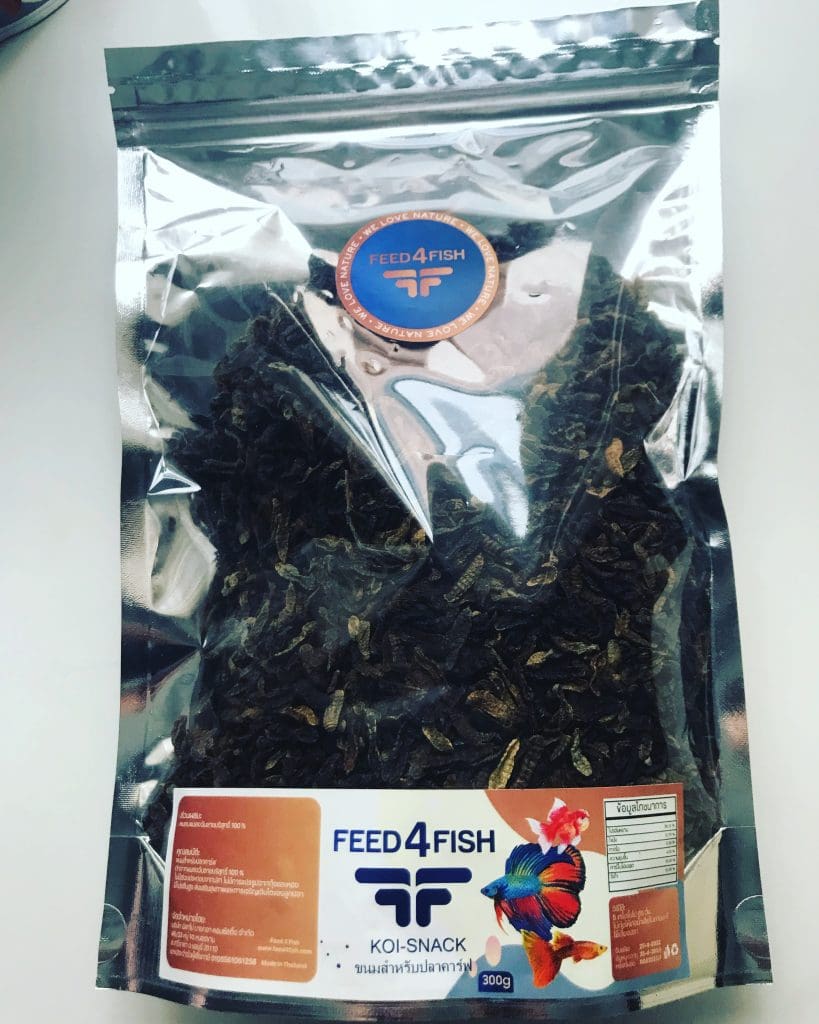
Feed4fish distributes Koi-Snack in 300 gr bags.

Feed 4 Fish - Koi Snack 300 gr - Black Soldier Fly dry larvae
Feed 4 Fish, Koi Snack 300 gr, Black Soldier Fly dry larvae