Categories
News

Betta Giant For Sale In Thailand – Import/Eport Betta Giant

Betta giant: information and details on the king of bettas

Betta giant is a term used to describe a type of Betta fish that has been selectively bred to grow larger than the average Betta fish. Betta fish are a species of freshwater fish that are commonly kept as pets and are known for their vibrant colors and aggressive behavior. Giant Bettas can reach up to 6 inches in length and can weigh up to 2 ounces.

Betta Giant breeding involves selectively breeding Betta fish to produce offspring that are larger than average. This is typically done by pairing the largest, healthiest Bettas with each other and carefully selecting the offspring for further breeding. The process can take several generations of breeding to produce Bettas that are significantly larger than average. In order to breed healthy and robust Bettas, it’s important to provide proper care and nutrition, maintain optimal water conditions, and avoid inbreeding.

Caring for Betta Giants requires the following:

  1. Tank size: A minimum tank size of 2.5 gallons is recommended for one Betta Giant.
  2. Water temperature: Keep the water temperature between 76-82°F.
  3. Water quality: Perform regular water changes and maintain high water quality with a filter and a heater.
  4. Diet: Provide a varied diet of live or frozen foods such as bloodworms, brine shrimp, and daphnia.
  5. Lighting: Provide low to moderate lighting to mimic their natural habitat.
  6. Decorations: Provide hiding spots and plenty of plants for the Betta Giant to rest and play in.
  7. Aggression: Betta Giants can be aggressive, so it is important to keep them in a tank with plenty of space and avoid overcrowding.

By providing proper care and a suitable environment, Betta Giants can live for up to 5 years.

Betta Giants, as the name suggests, can grow to be significantly larger than the average Betta fish. The final size of a Betta Giant can vary depending on factors such as genetics, diet, and overall health. On average, Betta Giants can reach a length of 4-6 inches and a weight of 1-2 ounces. However, some individuals may grow larger or smaller than this, so it is difficult to determine a definitive final size.

Betta Giants require a varied diet to maintain optimal health. A balanced diet for a Betta Giant should include:

Live or frozen foods: Bloodworms, brine shrimp, and daphnia are popular options.

Pellets or flakes: Offer a high-quality, protein-rich pellet

It’s important to feed Betta Giants in small amounts, multiple times a day, rather than one large feeding. Overfeeding can lead to health problems such as bloating and constipation. A varied diet will provide the necessary nutrients and support the Betta Giant’s overall health.

Don’t hesitate to contact us to check our Betta Giant availability
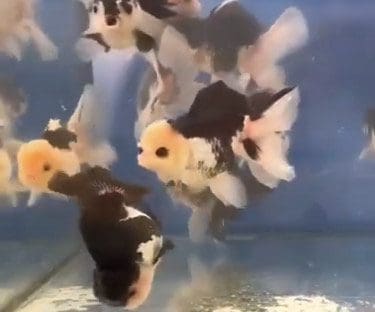
Betta Giant Nemo Galaxy
Betta Giant Nemo and Yellow Koi
Betta Giant Metallic and Koi
Betta Giant Yellow Koi
Categories
News

Oranda Panda and Oranda Tricolor for sale in Thailand

Import/Export High Quality Oranda Panda and Tricolor

Oranda is a type of goldfish that is known for its distinctive “hood” or “crown” on its head. This hood is a fleshy growth that covers the fish’s forehead, and can vary in size and shape depending on the individual fish. Orandas are a popular type of ornamental fish and have been kept by aquarists for many years. They come in a variety of colors, including red, black, calico, and chocolate, and are hardy fish that can be kept in a variety of water conditions. They are a slow swimming fish and are known to be generally peaceful and can live up to 10-15 years with proper care.

Orandas are a type of goldfish that can be bred in captivity. Breeding Orandas can be a challenging but rewarding experience for fish enthusiasts. Here are some general guidelines for breeding Orandas:

  1. Provide a healthy environment: Make sure that the water in the breeding tank is clean and of good quality, and that the temperature is between 68 and 72 degrees Fahrenheit.
  2. Select a breeding pair: Choose a mature male and female Oranda that have good body shape, color, and size, and that are free of any visible health problems.
  3. Condition the fish: Feed the breeding pair a high-quality diet and provide them with plenty of exercise to help them reach optimal breeding condition.
  4. Introduce the pair: Introduce the male and female Orandas into the breeding tank and observe them for signs of spawning, such as chasing and flaring of fins.
  5. Care for the eggs: Once the eggs are laid, remove the breeding pair from the tank to prevent them from eating the eggs. The eggs will hatch in around 4-7 days, depending on the water temperature.
  6. Raise the fry: Once the fry hatch, feed them with live or powdered food until they are big enough to eat regular fish food.

Keep in mind that breeding Orandas require a lot of patience, time, and dedication. And also, it’s important to consider that not all the eggs will hatch, and not all the fry will survive.

Oranda Tricolor

A tricolor Oranda is a type of goldfish that has three distinct colors on its body. The colors can vary depending on the specific fish, but they are typically red, white, and black. The “hood” or “crown” on the fish’s head is usually the same color as the red on the body. The tricolor pattern is a result of selective breeding and is not a natural coloration.

The tricolor Oranda is a popular variation among goldfish enthusiasts due to its striking coloration and the unique hood, which is a characteristic of the Oranda breed. These fish are generally hardy and can adapt to a variety of water conditions, they can live up to 10-15 years with proper care.

Keep in mind that like all goldfish, Orandas are cold water fish and should be kept in a tank or pond that is between 60 and 72 degrees Fahrenheit. They also require a good filtration system and regular water changes to maintain optimal water quality.

Oranda Tricolor

Oranda Panda

An Oranda Panda is a type of goldfish that is a cross between an Oranda and a Panda Moor. The Oranda Panda is characterized by the hood or crown on its head and a color pattern that is similar to that of a Panda, which is white with black spots or patches. They are usually a smaller fish than the typical Oranda and have a short, round body shape.

The Oranda Panda is a relatively new variation of goldfish and is considered to be a rare and unique variety. These fish are hardy and adaptable like the Oranda, and can live up to 10-15 years with proper care. They require a good filtration system and regular water changes to maintain optimal water quality. They can adapt to a variety of water conditions and are known to be peaceful and slow swimmers.

Keep in mind that like all goldfish, Oranda Pandas are cold water fish and should be kept in a tank or pond that is between 60 and 72 degrees Fahrenheit. They also require a good filtration system and regular water changes to maintain optimal water quality.

Oranda Panda
Oranda Tricolor Oranda Kirin
Categories
News

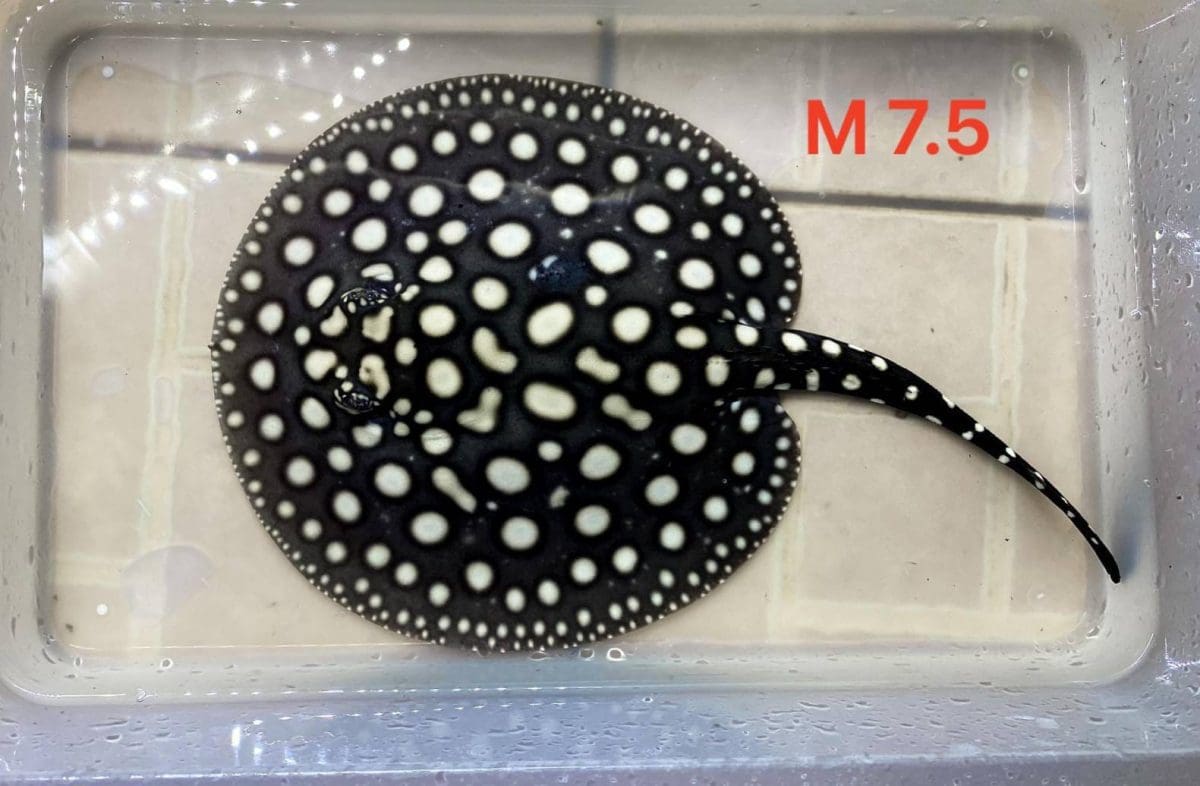
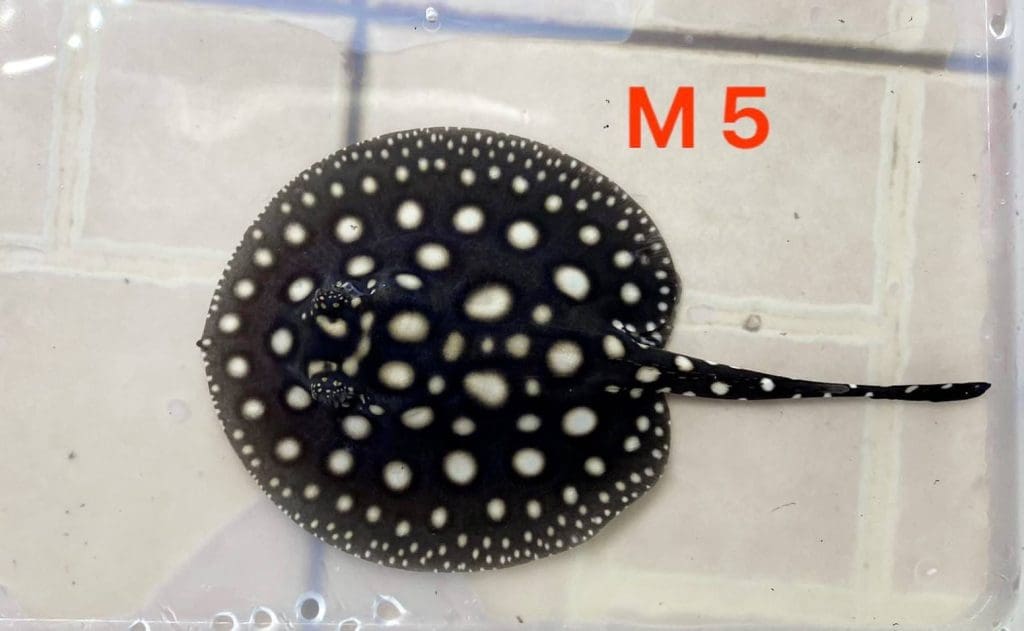
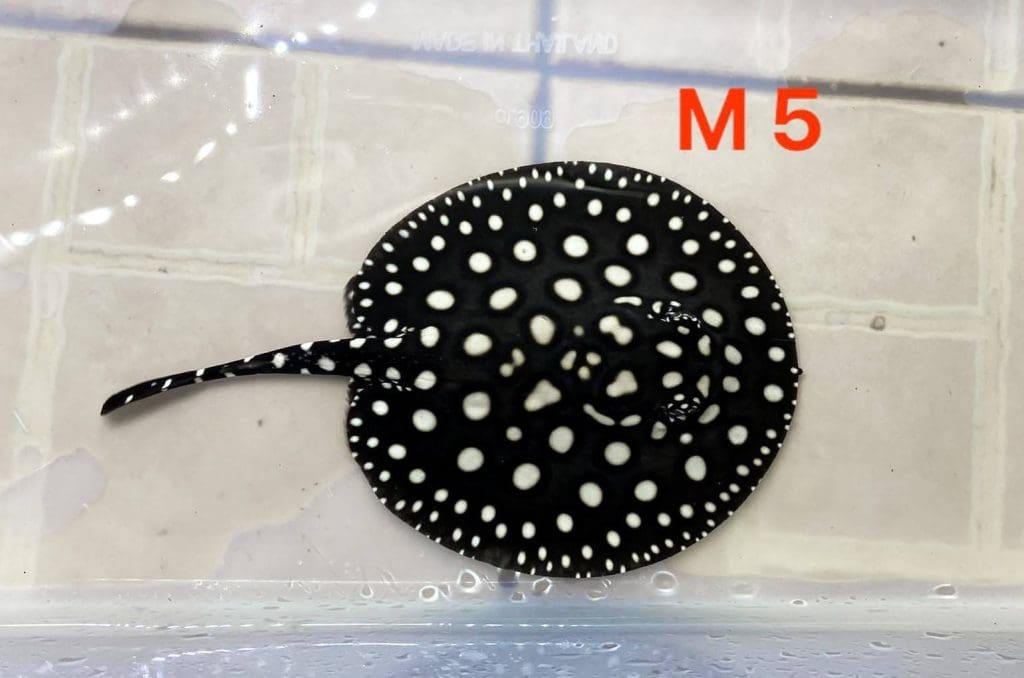
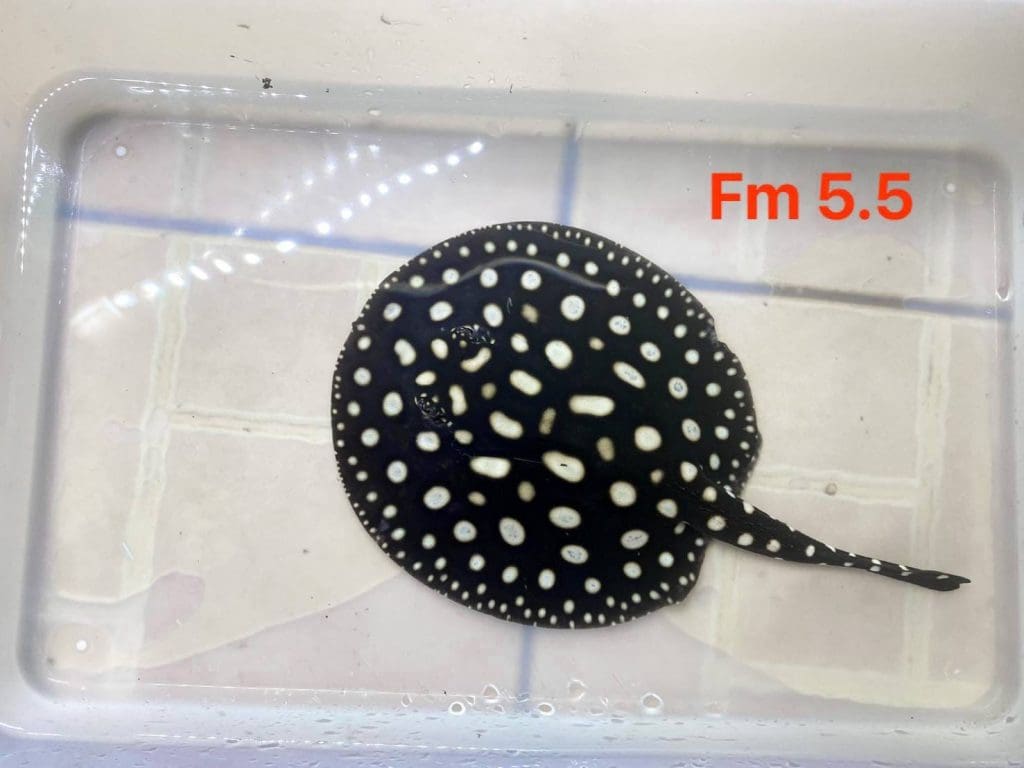
Bred freshwater stingray Potamotrygon leopoldi for sale in Thailand – Black Diamond

A large stock of aquarium kept Black Diamond freshwater stingrays for sale in Thailand

Potamotrygon leopoldi, also known as the Leopold’s River Stingray, is a species of freshwater stingray found in the Paraguay-ParanĂ¡ basin in South America. It is a medium-sized ray, typically reaching a disc width of around 50 cm. The species is known for its striking coloration, which includes a dark brown or black background with white or yellow spots. It is considered a vulnerable species due to habitat loss and overfishing.

Freshwater stingray,Black Diamond
Potamotrygon leopoldi

Potamotrygon leopoldi is a species of freshwater stingray that is known for its striking coloration, which includes a dark brown or black background with white or yellow spots. However, there are different strains of P. leopoldi that exhibit variations in their coloration and patterning. These strains are typically referred to as “morphs” or “color forms” and are often named after the location where they were first collected. Some examples of P. leopoldi morphs include:

  • The “normal” strain, which is the most common and has a dark brown or black background with white or yellow spots.
  • The “white diamond” strain, which has a white background with black spots and a black border around the spots.
  • The “yellow diamond” strain, which has a yellow background with black spots and a black border around the spots.
  • The “white spot” strain, which has a dark brown or black background with larger white spots and a white border around the spots.

It is worth noting that these morphs are not different subspecies or varieties, but just variations of the same species.

In captivity, breeding of different strains is not very common, as it is hard to keep and maintain them in captivity, and also it is a complex process to breed them.

Freshwater stingray,Black Diamond
Black Diamond
Freshwater stingray,Black Diamond
Black Diamond, Male

Potamotrygon leopoldi is a carnivorous species and its diet in the wild mainly consists of fish, crustaceans and insects. In captivity, it can be fed with a variety of foods such as:

  • Live or frozen fish (e.g. silversides, krill, squid, or earthworms)
  • Shrimp or prawns
  • Small pieces of fish or meat
  • Prepared frozen foods specifically formulated for stingrays

It is important to provide a varied diet to Potamotrygon leopoldi to ensure that it receives all the necessary nutrients. Feeding should be done in small amounts several times a day, instead of one large feeding. It is also important to note that Potamotrygon leopoldi is a bottom-dwelling species, so the food should be placed on the bottom of the tank or in a feeding area specifically designed for it.

It is also important to note that overfeeding can lead to obesity and other health problems, so the feeding should be done in moderation and with consideration of the size and activity level of the individual ray.

Freshwater stingray,Black Diamond
P. leopoldi
Freshwater stingray,Black Diamond
Black Diamond, Female
Categories
News

Import Symphysodon discus – Discus – from Thailand

Discus bred in Thailand. An excellent choice in terms of quality and affordable price

Discus fish are a species of freshwater fish that are native to the Amazon River basin in South America.

They are known for their unique shape and bright colors, and are a popular species for aquarium enthusiasts. They are a relatively sensitive species, and require high water quality, a balanced diet and specific water parameters to thrive in captivity. They are also considered relatively difficult to breed in captivity. They are a tropical fish and need a water temperature between 80-86 degree Fahrenheit and a pH between 6.0-7.5 and a water hardness between 2-12 dGH.

Breeding Discus fish can be a challenging task, as they have specific requirements for water quality, temperature, and diet. Here are some general guidelines for breeding Discus fish:

  1. Provide a spacious aquarium: Discus fish require a large aquarium with plenty of swimming space. A breeding pair will need at least a 55-gallon tank.
  2. Maintain optimal water parameters: Discus fish require clean, warm water with a pH between 6.0-7.5 and a water hardness between 2-12 dGH. It’s also important to keep the water temperature between 82-86 degrees Fahrenheit.
  3. Feed a high-quality diet: Discus fish require a well-balanced diet of high-quality protein, such as worms, brine shrimp, and bloodworms.
  4. Provide a suitable breeding surface: Discus fish typically lay their eggs on a flat surface, such as a piece of slate or a plastic breeding cone.
  5. Provide a quiet and dimly lit environment: Discus fish are sensitive to light and noise, so it’s important to provide a quiet, dimly lit environment during breeding.
  6. Separate the fry: Once the eggs hatch, it’s important to separate the fry from the adults to prevent them from being eaten.
  7. Feeding the fry: Feeding the fry with finely crushed flake food, baby brine shrimp, and infusoria until they are large enough to accept microworms, grindal worms and vinegar eels.

It’s also important to note that breeding Discus fish can be difficult and requires patience and experience. It may take several attempts before successfully breeding the fish.

Discus fish have distinct behaviors that can be observed in the wild and in captivity. Here are a few examples of typical Discus fish behaviors:

  1. Schooling: Discus fish are social animals and typically prefer to live in groups. They are often seen swimming together in a tight group or “school.”
  2. Nesting: Discus fish will often lay their eggs on a flat surface, such as a piece of slate or a plastic breeding cone. They will then take turns fanning the eggs with their fins to oxygenate them and keep them clean.
  3. Parental care: Discus fish are known for their parental care, with both parents participating in caring for the eggs and fry.
  4. Territory: Discus fish can be territorial, especially during breeding season. They will defend a specific area of their tank as their territory and may become aggressive towards other fish that enter that area.
  5. Resting: Discus fish will often rest on the bottom of the tank or on a flat surface, such as a piece of slate or a plastic breeding cone.
  6. Feeding: Discus fish are opportunistic feeders and will eat a wide variety of foods, including worms, brine shrimp, and bloodworms. They typically prefer to eat small, frequent meals throughout the day.
  7. Color change : Discus fish can change color as a form of communication and expression. The color change can be caused by different factors, such as stress, mood, or territorial displays.

By observing your discus behavior you can understand the fish better and create a suitable environment for them.

Discus fish come in a wide variety of strains or subspecies, each with their own unique characteristics and color patterns. Some of the more popular strains of Discus fish include:

  1. The “Wild Type” Discus: This is the original strain of Discus fish, which is found in the wild in the Amazon River basin. They have a brownish-green color with dark vertical stripes.
  2. The “Alenquer” Discus: This strain has a brownish-green color with a dark vertical band and a yellow or orange band around the edges of the fins.
  3. The “Heckel” Discus: This strain is named after the German explorer and naturalist Johann Heckel, who first described the species in 1858. They have a brownish-green color with dark vertical stripes and a distinctive black band around the edges of the fins.
  4. The “Pigeon Blood” Discus: This strain is known for its deep red color and is considered one of the most highly prized strains of Discus fish.
  5. The “Turquoise” Discus : This strain is known for its blue-green color, with a hint of turquoise.
  6. The “Blue Diamond” Discus : This strain is known for its deep blue color.
  7. The “Leopard” Discus: This strain is known for its leopard-like spots on the body, which can be a variety of colors.
  8. The “Snakeskin” Discus : This strain is known for its unique snake-like skin pattern, which can be a variety of colors.

These are some of the most common strains of Discus fish, but there are many other strains and variations available, each with its own unique characteristics and color patterns.

In our price list you can always find available:

  • ROYAL TURQUOISE DISCUS 6.5CM
  • ROYAL TURQUOISE DISCUS 7.5CM
  • COBALT BLUE DISCUS 6.5CM
  • COBALT BLUE DISCUS 7.5CM
  • RED EAGLE DISCUS 7.5CM
  • RED EAGLE DISCUS 8-9CM
  • GHOST DISCUS 7.5CM
  • GHOST DISCUS 10CM
  • BLUE DIAMOND DISCUS 6.5CM
  • BLUE DIAMOND DISCUS 7.5CM
  • MAROLBORO RED DISCUS 7.5CM
  • MAROLBORO RED DISCUS 8-9CM
  • RED TURQUIOSE DISCUS 6.5CM
  • RED TURQUIOSE DISCUS 7.5CM
  • GOLDEN DISCUS 6.5CM
  • GOLDEN DISCUS 7.5CM
  • GOLDEN DISCUS 8-9CM
  • SNOW WHITE DISCUS 6.5CM
  • SNOW WHITE DISCUS 7.5CM
  • ASSORTED DISCUS 5CM
  • ASSORTED DISCUS 6.5CM
  • ASSORTED DISCUS 7.5CM
  • ASSORTED DISCUS 8-9CM
  • ASSORTED DISCUS 12-12.5CM
  • TOMATO RED DISCUS 6.5CM
  • TOMATO RED DISCUS 7.5CM
  • TOMATO RED DISCUS 8-9CM
  • MELON RED DISCUS 7.5CM
  • MELON RED DISCUS 8-9CM
  • CHECKERBOARD DISCUS 8-9CM
  • CHECKERBOARD DISCUS 10CM
Categories
News

Feed 4 Fish Italian Betta Show Contest 2023 17/18 June – Carvico – Bergamo Italy

Siamo contenti di supportare questo nuovo evento dedicato ai Betta:

– Italian Betta Show 2023.

Questo competizione si terra’ il 17 e il 18 di Giugno in Italia, presso la sede della azienda agricola La Mangrovia, nella cittadina  Carvico in via Bedesco in provincia di Bergamo.  Questo evento comprendera’ una competizione uffiale di Betta Show che seguira’ gli standard di giudizio della associazione Bettas4all con la presenza di giudici di importanza internazionale. Nella stessa struttura e negli stessi giorni, si terra’ anche una altra manifenstazione: Wild Form Expo, dove gli appassionati di questo meraviglioso  hobby potranno osservare dal vivo i pesci appartenenti alle famiglia degli Anabantoidae e alla famiglia degli Osphronemidae (la famiglia di origine a cui appartengono i Betta) nelle loro forme e colorazioni originali, grazie ad un lungo processo di selezione partito dalle forme selvatiche e rigorosamente mantenuto nelle generazioni successive. Noi di Feed4Fish saremo presenti con il nostro mangime dedicato alla alimentazione dei Betta ma non solo: presenteremo a tutti i partecipanti la nostra linea dedicata ai pesci tropicali di acqua dolce (dall’avannotto fino agli snack per carpe koi)

Che cosa ha di diverso il mangime per i Betta della linea Feed4Fish? Oltre ad una accurata scelta delle materie prime, i nostri mangimi non contengono proteine animali provenienti dalla pesca e dai suoi scarti industriali: l’unica fonte di proteine nobili presente nei nostri mangimi previene esclusivamente dalle farine e dagli olii di Hermetia illucens (comunemente chiamato mosca soldato – Black soldier fly in inglese), un piccolo insetto che, oltre ad avere una percentuale di proteine nobili al suo interno molto elevata, puo’ essere allevato esclusivamente con gli scarti organici provenienti dalla agricoltura, rendendo la sua produzione a zero impatto ambientale. Inoltre, grazie al ciclo “chiuso”, e’ possibile dare anche maggior valore al lavoro dei contadini, aumentando la loro produttivita’ e ottimizzando gli sprechi alimentari.

Vi aspettiamo numerosi a questo evento presso la sede della azienda agricola La Mangrovia.

Ogni hobbista e allovatore europeo sara’ il benvenuto.

Coglieremo l’occasione per conoscervi e per farvi vedere la nostra linea completa di mangimi, potendovi spiegare dal vivo le caratteristiche principali e le migliori modalita’ di utilizzo di questo innovative prodotto

Non esitate ad iscrivervi a questa competizione internazionale e, per qualsiasi richiesta di informazione, contattate tramite il sito ufficiale La Mangrovia.

Ci vediamo a Giugno !!!!

Italian Betta Contest – Betta4all- La Mangrovia

We are happy to support this new event dedicated to Bettas: Italian Betta Show 2023.

This event will take place on the 17th and 18th of June in Italy, at the headquarters of the La Mangrovia farm, in the small town of Carvico in Bedesco Street in the province of Bergamo (North of Italy). This event will include an official Betta Show competition which will follow the judging standards of the Bettas4all association with the presence of internationally renowned judges. In the same structure and on the same days, another event will also be held: Wild Form Expo, where fans of this wonderful hobby will be able to observe live fish belonging to the Anabantoidae family and to the Osphronemidae family (the family of origin to which Bettas belong) in their original shapes and colours, thanks to a long selection process starting from the wild shapes and rigorously maintained in the following generations. We at Feed4Fish will be present with our feed dedicated to feeding Bettas but not only: we will present to people our entire line dedicated to tropical aquarium fish (from fry to koi carp snacks)

What is different about Feed4Fish food for Bettas? In addition to a careful selection of raw materials, our feed does not contain animal proteins from fishing and its industrial waste: the only source of noble proteins present in our feed comes exclusively from the flours and oils of Hermetia illucens (Black soldier fly), a small insect which, in addition to having a very high percentage of noble proteins inside, can be raised exclusively with organic waste from agriculture, making its production zero environmental impact. Furthermore, thanks to the “closed” cycle, it is possible to give even greater value to the work of farmers, increasing their productivity and optimizing food waste.

We look forward to seeing you at this event at the headquarters of the La Mangrove farm. Every European hobbyist and breeder will be welcome. We will take the opportunity to get to know you and to show you our complete line of feed, being able to explain the main features and the best methods of use live

Do not hesitate to register for this international competition and, for any information request, contact the official La Mangrovia website.

See you in June !!!!

Italian Betta Contest – Betta4all- La Mangrovia